Custom Skirmish
Set the length of the bout and decide what each wizard carries into the realm.
Rival spellcraft
Unlimited magic still obeys casting time, range and spell duration.
Gather the old ingredients. Prepare your spellcraft. Discover what the other wizard has become before he discovers you.
Set the length of the bout and decide what each wizard carries into the realm.
Unlimited magic still obeys casting time, range and spell duration.
Well fought. Your rival's magic is extinguished and the realm lies open before you.
Notes on survival, spellcraft and the old ways of the realm.
Two wizards enter the realm. Only one leaves it. Gather the old ingredients, return to your cauldron and prepare the magic that will outwit your rival.
Only one or two ingredients grow in each region at a time. Gathered plants return elsewhere after roughly 30 to 60 seconds, favouring woods, water, daylight or darkness.
Storm lore. Witchbane flowers only beneath a thunderstorm. Your spellbook records where every other ingredient is most likely to grow.
Your home ward makes you invulnerable and pauses hostile curses, but suppresses every spell within it. The rival's ward protects only him. Step beyond your ward to heal, attack or invoke magic.
Skiffs outrun a wizard on foot. Interact beside one to board or disembark. Streams join the western homewater to the eastern meres; bridges preserve the principal walking routes.
Interact beside your cauldron to open the spellbook. Most enchantments endure for 30 seconds; brewing further copies extends their time. Heal and Teleport act once, while Poison persists until countered.
Offensive magic seeks a rival inside its shown range. Shields absorb limited damage. Freeze holds for 10 seconds, but a damaging strike shatters the ice and briefly prevents another freezing.
Remember: brewing stores a spell. It never casts it.
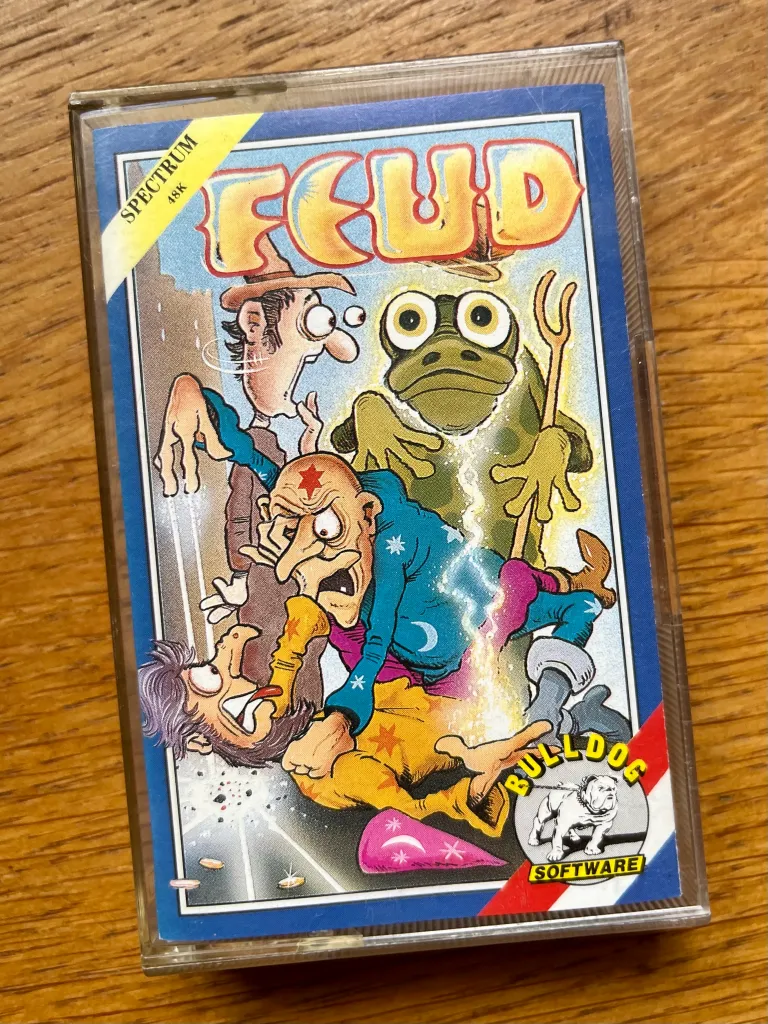
Before The Other Wizard, there was Feud: two rival wizards, one shared world, and the constant suspicion that the other wizard might already be ready for you.
An independent spiritual successorA childhood memory
I first encountered Feud at a friend's house in the small coal-mining village where I grew up. Home games still arrived on cassette tapes. You waited through minutes of electronic noise, hoped the loading screen did not collapse, and then took your turn.
Feud was single-player, but we played it together: wandering its landscape, gathering ingredients, returning to a cauldron and trying to prepare before the rival wizard found us. The graphics were spare and the technology limited, yet the uncertainty made its world feel enormous.
Was he nearby? Had he already brewed a spell? Should you keep searching, or turn for home?
That unanswered question was the real magic.
The original Feud
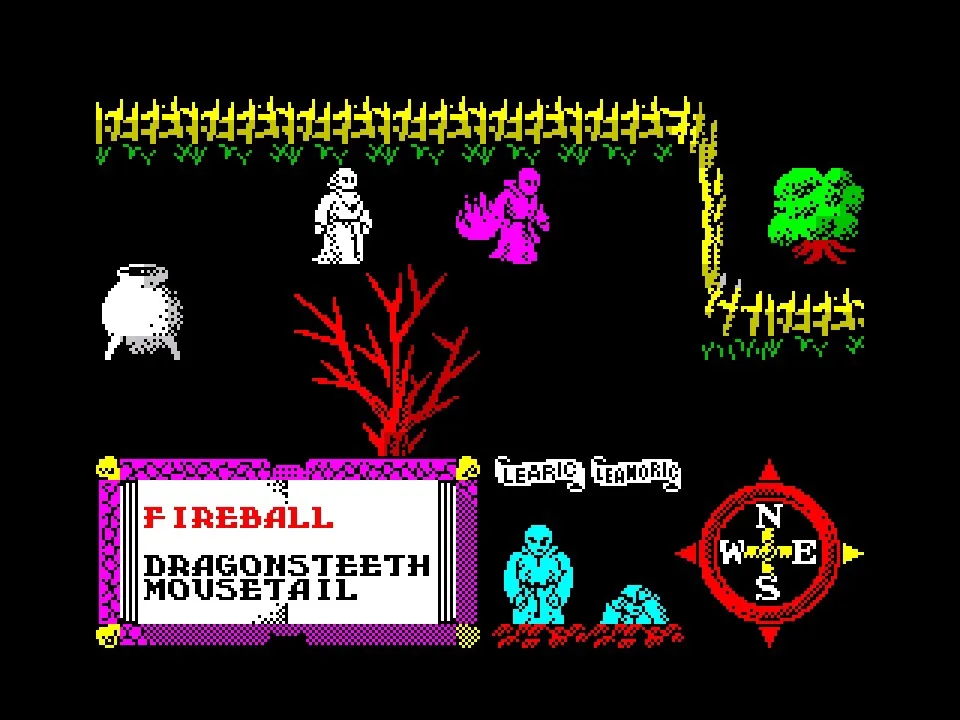
Released in 1987, Feud was developed by Binary Design and published by Mastertronic through its Bulldog Software label. John Pickford devised the game, Ste Pickford created its distinctive graphics, and David Whittaker contributed music and sound, alongside the programmers and artists who brought its different home-computer versions to life.
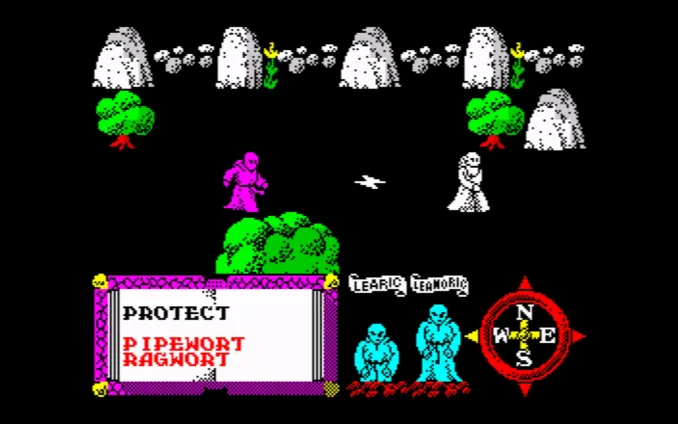
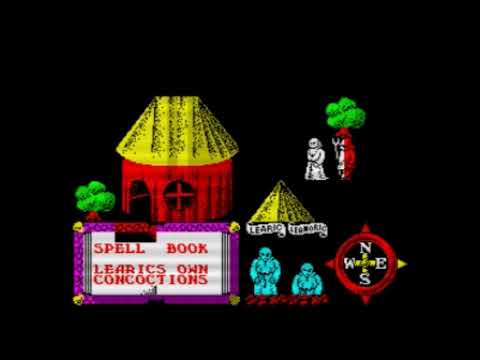
You played Learic against his brother Leanoric. Both inhabited the same map, searched for ingredients and brewed their own spells. A compass revealed the rival's direction but never his distance. He might be several screens away, or moments from walking into view.
That was the heart of it: an early contest against an AI-controlled opponent whose unseen progress transformed simple collecting into genuine tension.
Recreating the feeling
Decades later, I still remembered those two wizards. I wondered why the idea had never truly left me, and whether its tension could survive in a new game.
I chose not to recreate Feud, copy its map or attempt an unofficial remaster. I even avoided replaying it while establishing the project. Returning to every detail risked replacing the version that had survived in my memory. Instead, I followed its emotional blueprint: the pleasure of preparing, the fear that your rival is ahead, and the panic of meeting before you are ready.
The Other Wizard has its own world, artwork, rules and new ideas. Boats cross connected waterways. Villagers live around the conflict. Weather, darkness and habitat shape the search. But every journey is still haunted by one question.
Even when he cannot be seen, his presence changes every decision.
Made through Late Night Systems
The Other Wizard grew through a long cycle of describing, building, testing, breaking and reshaping with AI-assisted tools. It is not an argument that AI replaces professional game developers. It is an experiment in what becomes possible when people can work directly with software through language and persistence.
The complete build story will appear on Late Night Systems.